10 things i have learned about myself as an individual and as a learner:
1. I have made a great group of friends since moving to leeds
 
2. I am a lot happier studying graphic design rather than photography for a degree never the less i still incorporate it into my designs
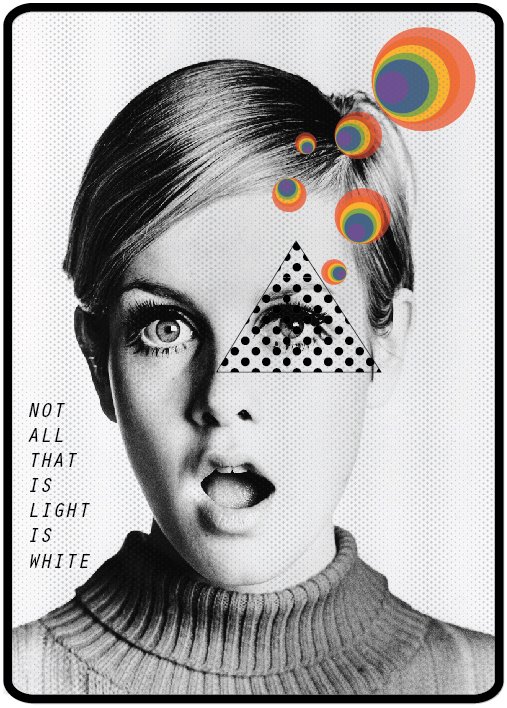
3. I feel like i have learned a lot over the past few months in comparison to my previous first year at university

4. I have gained confidence in public speaking, not a lot, but enough to speak about my work in crits

5. I feel like i have matured a lot in the past few months purely because of the course, theres no time to mess around, work needs to be done

6. Became more organised, in some ways

7. Realised i'm not a fast learner, i need to practice a lot to be able to create or perform, sometimes this isn't always a bad thing
. . . . . . . . . . . .
8. I like new things since moving to leeds, music taste has developed since moving from the capital!

9. I am a proud owner and love my apple macbook pro

10. My love for shopping and partying needs to be tamed
 
10 things i have learned about my self as a designer:
1. I have gained a lot of skills since starting the course

2. I have an idea of where i would LOVE to be in the future
  
3. I have started to like aspects of graphic design i never even knew about/ thought i would ever really be interested in
 
4. I love typography and like to involve it in my work as much as i can
  
6. Rebranding the Crystal Castles merchandise for the what is a line brief made me realise how much i would love to design in that area
 
7. I'm a fan of packaging design and would love to experiment more with it and encourage it into my work

8. I'm not very good with words
. . . . . . . .
9. I'm a nervous wreck when it comes to public speaking

10. I love to collaborate with others in the class to see what ideas we can bring together
  |
Sunday, 19 February 2012
Study task 4 - Interim self evaluation

Wednesday, 8 February 2012
Evaluation - 100 things
End of module evaluation
1. What skills have you developed through this module
and how effectively do you think you have applied them?
I have developed a faster learning with illustrator
and photoshop after spending the past few weeks designing on the software’s,
which I am happy with, as I wanted to get better. I also have learned
research in a more appropriate and logical way compared to the last module I
wasn’t sure what was relevant to look for and sometimes got lost with in the
research and then lacked in design work.
|
||||||||||||||||||||||||||||||||||||||||||||||||||||||||||||
2. What approaches to/methods of design production
have you developed and how have they informed your design development
process?
|
||||||||||||||||||||||||||||||||||||||||||||||||||||||||||||
I have approach this project with an informed mind,
I did a body of research which I was happy with and learned a lot from to
help me design 10 products I enjoyed doing. With out the research the design
process would have taken a lot longer, so I will take into account from now
on that both are essential but design doesn’t com from nowhere.
|
||||||||||||||||||||||||||||||||||||||||||||||||||||||||||||
3. What strengths can you identify in your work and
how have/will you capitalise on these?
|
||||||||||||||||||||||||||||||||||||||||||||||||||||||||||||
I believe I have developed a stronger understanding of
the illustrator, Photoshop and InDesign which I need to constantly practice
on to get to the level is want to be, I enjoy working on them so long as I
know what I’m doing, starting a design from starch is pretty difficult on
them so its necessary for me to do a great deal of design sheets to get more
visuals, which I need to do more of.
I think I have built a better graphic design
vocabulary, I can talk about my work more confidently, I understand what
other peoples work is about.
|
||||||||||||||||||||||||||||||||||||||||||||||||||||||||||||
4. What weaknesses can you identify in your work and
how will you address these in the future?
|
||||||||||||||||||||||||||||||||||||||||||||||||||||||||||||
My time management skills have never been up to
starch, and this is something I have to work on as it has an impact on my
overall body of work, I want to create a lot more work in future to show my
full potential.
One thing I found difficult was grasping the size
and scale of my products as I was designing them; they involved accurate
measuring and precision. Hopefully as I continue to design this will no
longer be a problem.
Another issue that arose was my lack of photoshop
skills, I definitely need to practice a lot more with the software to be able
to create designs that I am fully satisfied with.
|
||||||||||||||||||||||||||||||||||||||||||||||||||||||||||||
5. Identify five things that you will do differently
next time and what do you expect to gain from doing these?
|
||||||||||||||||||||||||||||||||||||||||||||||||||||||||||||
I intend to improve my
work management effectively, I want to design work I am happy with as well as
work that fully delivers to briefs, to do this I will organise my time a lot
more in order to produce satisfactory work.
I propose to work
harder at software programme and my drawing skills in order to be pleased
with my designs.
I aim to blog daily so
that work doesn’t catch up with me and effect other work.
|
||||||||||||||||||||||||||||||||||||||||||||||||||||||||||||
Sunday, 22 January 2012
Categories/ Sub categories - research task
In Fred's session we explored a variety of types of publishing; magazine, book and general were the three main categories.
In our blog groups we thought of different sub categories for each, here are the following:
Magazine
Sub categories: Gardening, home, current affairs, children, fashion and celebrity, cooking, music, art and design, comic and technology.
Book publishing
Sub categories: Health and fitness, children s books, design, cookery, travel, educational, language, novels, fiction, teaching, auto biographies and manuals.
General publishing
Sub categories: Brochure, research, instructions, flyer, catalogue, public sector, self promotion and annual reports.
From this we all selected two sub categories to collect images from source material. Here is my collection:
Magazine: Fashion and celebrity

Vogue Paris. Fashion, people, beauty, trends.

Nylon. Fashion, beauty, film, music.

Cosmopolitan. Hair & beauty, fashion, lifestyle, love and sex, dating, men.

i-D. Fashion, music, culture, film.

Dazed and confused. Fashion, art and culture, photography, film, music, projects.

Elle. Fashion, beauty, style, catwalk, travel.

V. Fashion, articles, photos, art.

Fashion. Beauty, shopping, scene and music.

Look. High street fashion, gossip, beauty, sales and offers.

Glamour. Fashion, trends, life, love sex, do's and don'ts, beauty and hair.
Magazines: Children

Girl talk. Puzzles, gossip, makeup, photos.

Match of the day. News, games, footee, photos, stats.

Doctor who. Monster facts, behind the scenes secrets, competitions, puzzles, posters.

CBeebies. Fun, educational, puzzles.

Hello Kitty. Stickers, characters, puzzles, accessories.

Story Box. Poems, drawings, puzzles, games, stories.

Beano. Adventure, comic strip, characters.

Ben 10. Adventure, characters, cards, collection.

Barbie. Barbie fashion, activities, colouring in features.

Disney animals. Cute pet talk, colouring in features, fun facts.
Sunday, 11 December 2011
Evaluation - How to . . .
How to: Self evaluation
What problem did you
identify?
For the how to brief our group consisted of myself, Joel, Lisa and
Emily our main notion was paper, and the problem we decided to identify was ‘how
to make a paper airplane?’
What evidence did you find
to support your decisions?
Initially we all made an action plan; this consisted of what
each of us should research. My role was to investigate paper folding techniques
for airplanes, the different models one can make from a piece of paper, and
what type of paper works best for making aircrafts.
What methods did you use to
gather your evidence and what forms did it take?
Primary quantitative- data, numerical: a questionnaire
queering about paper air planes, opinions, crafting and knowledge.
Primary qualitative- data, written: a questionnaire
asking individuals about paper air planes, opinions crafting and knowledge.
Secondary quantitative- data, numerical: collecting
information about different models of air planes, paper weights, entertainment
which applies to air planes and smartphone application data.
Secondary qualitative- data, written: collecting
information about different models of air planes, paper weights, entertainment
which applies to air planes and smartphone application data, motion graphics,
logos, message and delivery options.
What methods of research did
you find useful?
I believe the best methods applied to our group was the research
we all gathered, it helped us to initiate what we wanted to do with our ‘how to’,
in particular primary qualitative and secondary qualitative, merely because we
wanted people opinions and views on paper air planes, how necessary they are to
people, what would one do with a paper plane and why, if anyone was interested
in the crafting of paper planes. As well as a secondary version of this,
looking into origami, paper crafting, games, sticker art, logo designs and
smart phone applications were all the steps we researched for us to get to our
final design.
How did these inform a
response to your problem?
As a group we discovered that
there was no existing purpose for making a paper air plane, other than for fun,
yet that reason alone wouldn’t have a distinct reason for making one, in any
shape or form, from then on we decided a physical paper air plane wasn’t exactly
necessary, in fact, knowing how to make a paper plane digitally and still
physically could be quite interesting.
What methods did you encounter
as problematic?
Unfortunately
each of us four members if the groups had been absence at least once within the
two weeks, which put us behind with group decisions, but we overcome that
problem by keeping in touch through email and texting to make sure all of us
agreed on any further input, ideas, designs that was added to our ‘how to’.
Aside that reason, out time management could have been a little more organised,
however the entire project pulled together in the end, which we were very happy
with, we agreed if we had of thought of the concept of our work a week earlier
we could had made it a lot more exciting as a brief.
How did you overcome this?
In
response to the previous question, we all kept in touch for the progress of the
brief, and helped each other develop the project as a whole, overall I believe
our group worked well aside small inconveniences.
What research could you have
carried out that would have proved more useful?
Initially
I believe we should have done a good deal more primary research, collected more
data, and gave people surveys to fill out.
Our
final idea concluded as an application for a smart phone, the application was
called ‘air craft messenger’,
it was a function which served a purpose of message and delivery through the
concept of paper and airmail in the form of a paper plane. Not the average
paper plane, instead a digital version. Because this idea was raised later on
into the project, out ideas, designs and research was limited to what came to
us first to bring the idea together and work, I think that if we had of worked
at it sooner, we could have grasped and initiated the design to its full
advantage. We could have through roughly observed smartphone applications, how
they work, and possibly made our application work on an iPhone as an instant
messenger service.
Five things that you have learnt about the design process over the last two weeks:
Five things that you have learnt about the design process over the last two weeks:
-That
I need to involve myself more in the design process, suggesting final designs
not initial ideas.
-Those
final outcomes always work best with a lot of research to back up the concept,
design, and motive.
-Working
in a group designing works well in the sense there are a lot of ideas flowing,
yet decision making can be sometimes hard or correct.
-I
have learnt that as a group we should have thoroughly designed a lot more to achieve
the outcome we could of with the how to brief.
-In
particular to our design approach, as a group we felt we needed more time to
make it to the standard we wanted it.
List five things you would
do different next time:
-Manage
time more effectively
-Plan
ideas though roughly
-Research
all aspect necessary
-not
rush, but try to full fill time to its full advantage to achieve a better body
of work
-have
more input into final designs, literally, not just idea input
Subscribe to:
Posts (Atom)